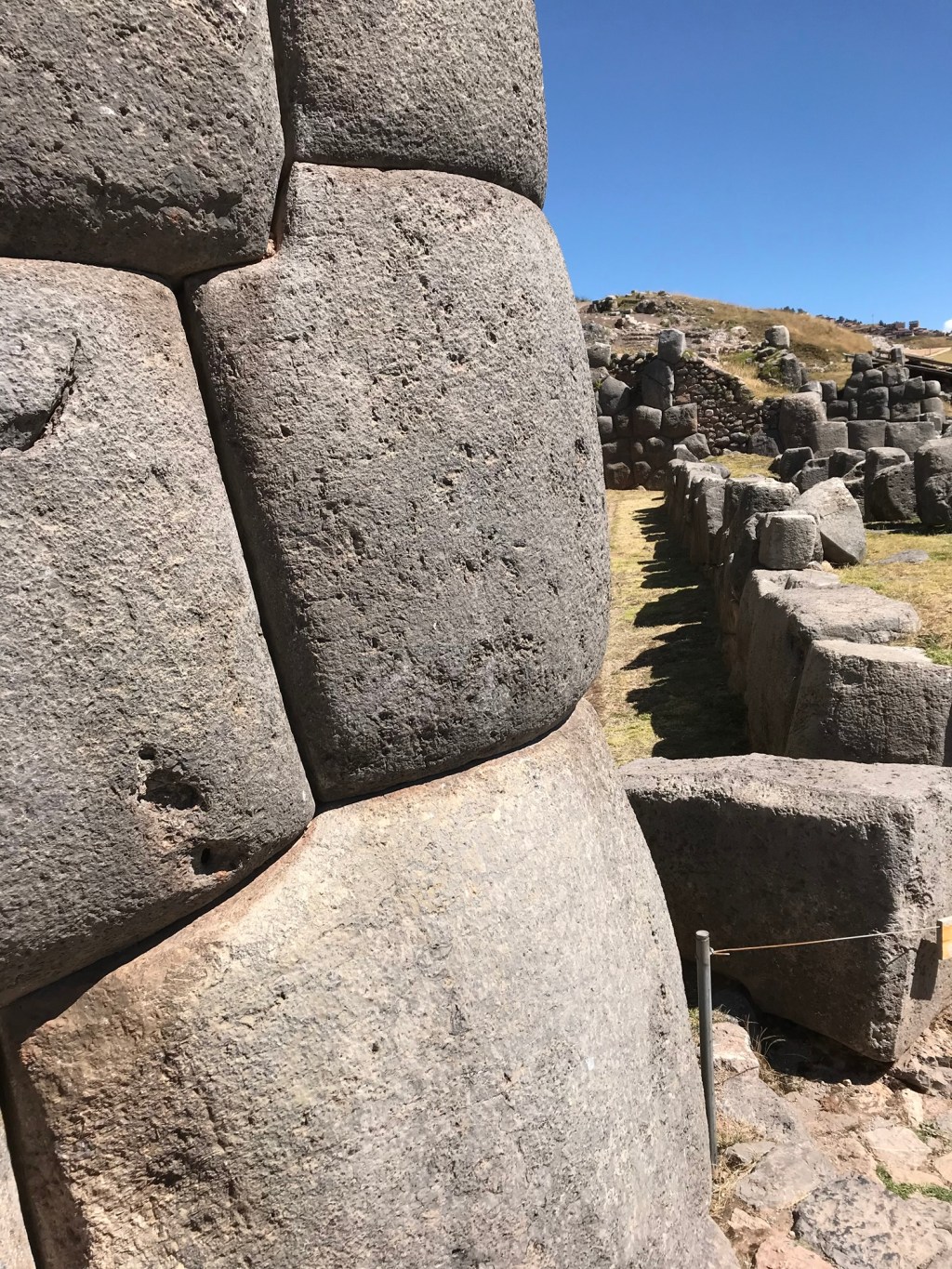
Peru with My Dad: a six-part series about a shared dream, the Andes, history, archaeology, and how exploring place together shaped my thinking about narrative, listening, memory, and professional responsibility.
Here we go. It’s story time.
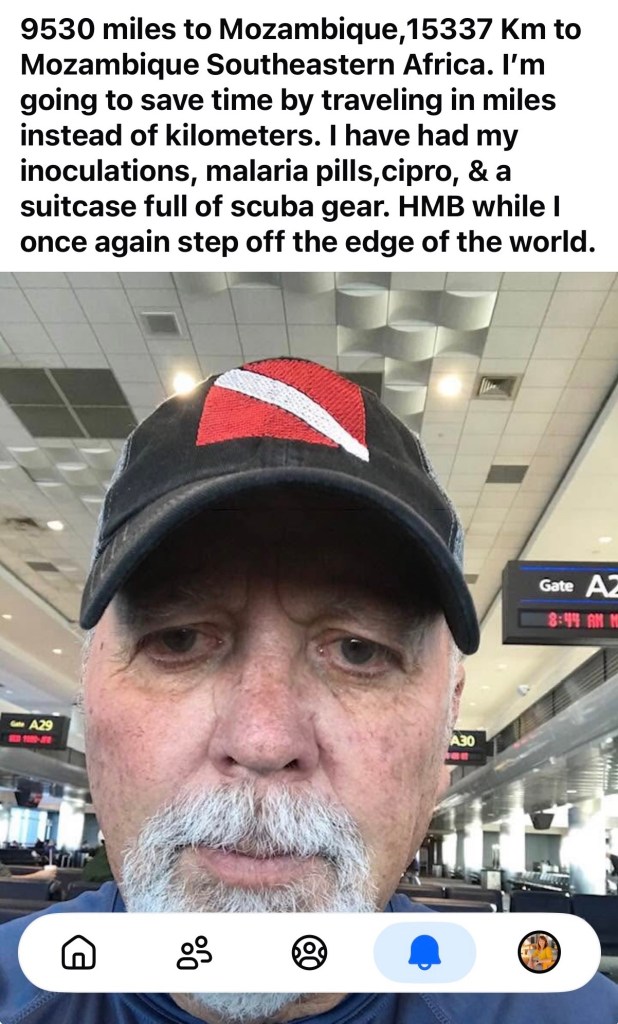
In May 2018, my dad and I traveled through parts of the Inca Trail, Cusco, the Sacred Valley, and onto Machu Picchu. After my mom died in 2014, he no longer had the companion with whom he had imagined making that journey. So I began exploring with him—joining the man whose travel motto was: “HMB while I once again step off the edge of the world.”
HMB meant “Hold My Beer.” Classic Dad. Classic Greg.
This series follows that trip not as a complete account of Peru, but as a daughter’s record of paying attention beside her father: to archaeological sites and mountain paths, to stone and an unreasonable number of steps, to plants and animals, to preservation, and to histories much bigger than the two opinionated Americans passing through them.
Post 1. Grief, Greg, and One Economical Hotel Room
My dad’s phrase for the kind of travel he loved captured his delight in distance. It wasn’t escape for its own sake, but the pleasure of discovering that the world was larger, stranger, and more beautiful than the routines that usually held us. He approached a passport stamp the way some people approach a winning lottery ticket: as proof that life was about to get interesting.
Machu Picchu was one of his dreams. For years, it belonged to the future he imagined with my mom. When she died in 2014, grief altered more than the present. It also changed the map of the future: the journeys they had not taken, the places still waiting, the companionship he had assumed would be beside him.
This is the first time I have really written about my dad, who died last year. My doctor, therapist, professional coach, and many others have urged me to write my grief out—to give it somewhere to go besides inward. I have resisted that invitation in part because writing makes experience more real. It asks me to name what has happened and what remains.
To write this, I had to go back through his Facebook feed and my photographs from Peru to recover details that memory had softened or misplaced. It was the first time I had really done that—the first time in a long while that I let myself look at him again, not in a single familiar photograph but across posts, expressions, jokes, and ordinary moments. Hell, he’s staring right at me (and you) in a silly selfie you see below that coined his favorite travel phrase.
I am laughing more than crying as I pull this together. But grief is not the only thing waiting there. I keep remembering how funny he was: a smart-ass, deeply sarcastic, and usually ready with a comment that made clear he had noticed both the absurdity of the situation and everyone else’s failure to appreciate it quickly enough. One of his posts declared: “All I know is that there are three kinds of people in this world: those who can count and those who can’t.” That was him—delivering bad math with perfect confidence and waiting for the rest of us to catch up. Looking back has hurt, but it has also returned the sound of him to me. The photos document where we went. His posts remind me who was there.
In some ways, this series is also where my broader turn toward recording my professional thinking and experiences begins. Grief has brought me back to my roots as a writer: to the practice of noticing, making meaning, and preserving what might otherwise disappear.
It has also clarified the gravitational urge I feel to see the earth—to move through landscapes, pay attention to place, and understand a little more of the world while I can. That impulse came from him.
Writing about Peru now allows those threads to meet. This is a story about a trip we took, but it is also about inheritance: the love of travel he passed to me, the writer I am finding again, and the life I am trying to build from what he taught me and what his absence continues to reveal.
That was when I began exploring with him. I did not replace my mother, and the trips did not repair what had been lost. They made another kind of relationship possible. We learned one another as travelers: how each of us handled uncertainty, fatigue, wonder, wrong turns, early departures, and the small negotiations of sharing an itinerary. We also learned that neither of us was especially interested in following a rule simply because someone had printed it in bold.
Exploring and learning about places together gave us a way to move through grief without making grief the only subject in the room. The shared work of travel—reading maps, interpreting history, noticing landscapes, changing plans, and deciding where to eat—helped us loosen the old parent-child roles. I was no longer simply the daughter being guided, and he was no longer only the father expected to know what came next. We became two adults learning beside each other, occasionally disagreeing, frequently laughing, and building a relationship that neither of us could have reached by staying home.
On this trip, we also stayed in the same hotel room to save money, which accelerated the adult-relating experiment considerably. Financially, it was practical. Acoustically, it was an attack. My dad snored with the confidence of a man who believed sleep should be publicly announced, so I traveled with earplugs and the quiet understanding that love sometimes sounds like a chainsaw through a wall.
In May 2018, we flew from Lima to Cusco for more than a week of travel that would take us from Cusco through Pisac and Ollantaytambo in the Sacred Valley, by train to Aguas Calientes, up to Machu Picchu, and back to Cusco. The schedule looked compact on paper. The meaning of the trip stretched much farther—and, as it turned out, the itinerary was more of an opening argument than a binding contract.
At the beginning, I thought I was helping my dad fulfill a dream. Looking back, I understand that he was teaching me something too: a life changed by loss could still make room for anticipation. The future was still down the road. There were still places where we could arrive together, slightly breathless, looking out at something neither of us had seen before—and probably wondering why no one had warned us about all the stairs.
Thanks for reading. Stay posted for post 2 in the series. HMB I’ll be right back.


Leave a Reply