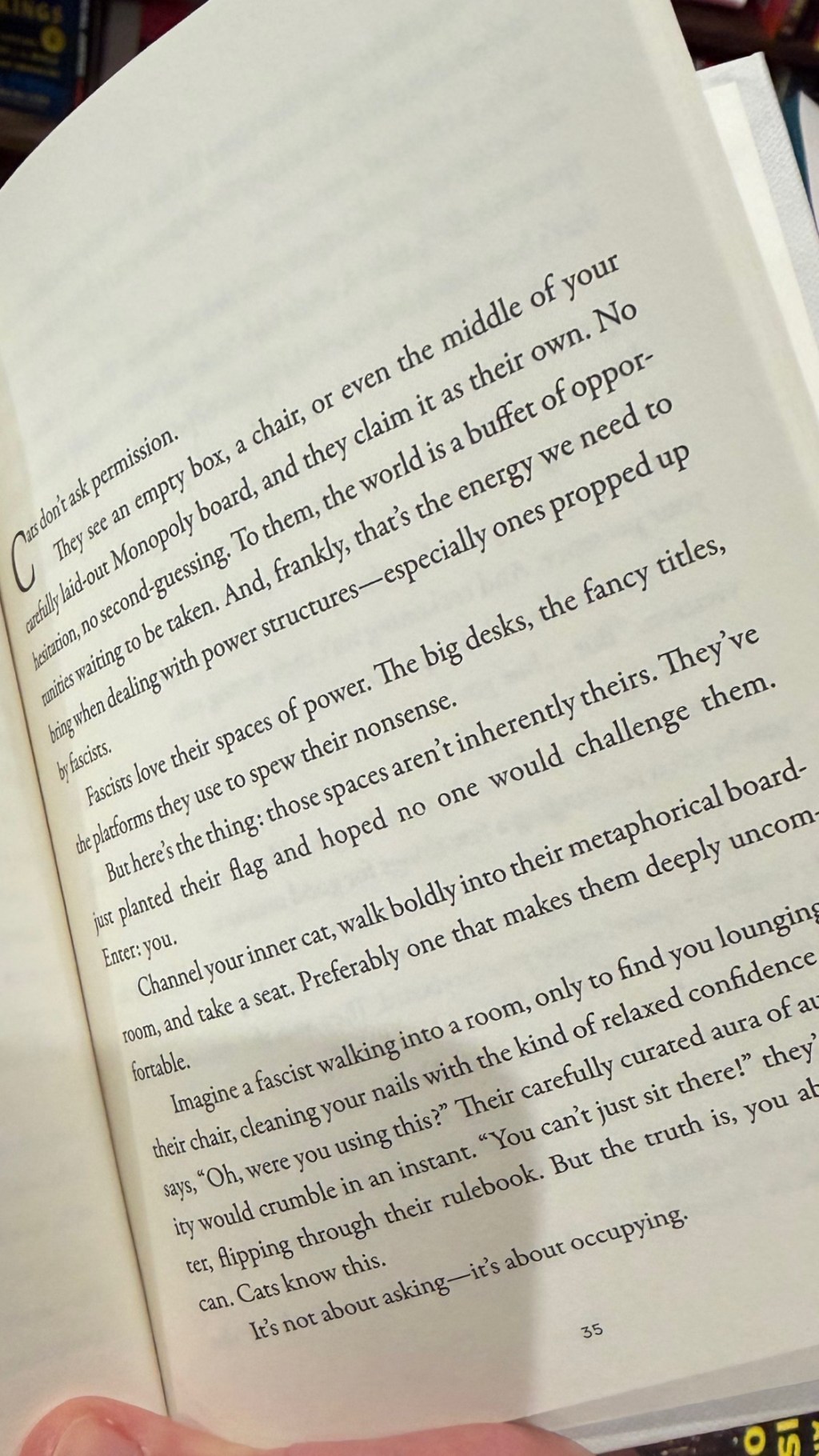
Credit note: Cover photo captures writing from A Field Guide to Getting Lost by Rebecca Solnit.
I’ve come to believe that stories are one of the most valuable things we exchange. Not currency in the literal sense—my mortgage company remains stubbornly uninterested in a well-told anecdote—but something that carries meaning from one person to another and from one generation to the next.
Long after a meeting ends, a policy changes or an institution moves on, stories remember what happened. They tell us who was there, what was at stake and how the moment looked from where someone stood.
Facts matter, of course. Dates, records and data give us the scaffolding. Stories make us care what the scaffolding is holding up. They preserve the texture that official accounts often smooth away: the choices people faced, the relationships that shaped events, the losses that did not fit neatly into a report and the imagination that made change possible.
They can also keep memory alive when institutions fail to record it—or when power would rather everyone develop a sudden case of collective amnesia.
This is why stories and transparency belong together. Transparency is not simply posting a document online, checking a disclosure box and calling it a day. It is helping people understand what is happening, why a decision was made, whose perspectives shaped it, what remains uncertain and what comes next.
Facts without context can technically inform people while still leaving them outside the meaning of a decision. Stories connect information to lived experience, responsibility and public memory.
That does not mean wrapping every decision in a tidy narrative with a beginning, middle and suspiciously convenient ending. Ethical storytelling should preserve complexity, name tension and make room for more than the institutional point of view. It should be clear about what is known, what is interpretation and what is still unfolding.
Used responsibly, stories do not decorate transparency. They make it human, understandable and accountable.
This belief shapes how I think about strategic communications in philanthropy. A funder’s voice carries weight in community whether the institution intends it to or not. What we name, explain, emphasize, delay or leave unsaid affects trust.
Our communications can help people understand how resources move and decisions are made. Or they can deepen the distance between an institution and the people affected by its choices—especially when the language requires a decoder ring and three years of sector experience.
Because philanthropy holds resources and influence, timely and transparent communication is more than good practice. It is part of accountability. Communities and partners should not have to fill silence with speculation, wait indefinitely for information that affects their work or translate institutional language into something recognizable.
Good communication helps people orient themselves. It is candid about change and uncertainty, clear about process and responsibility, and respectful of the knowledge communities already hold.
It also pays attention to voice. Institutions can use their platforms to dominate the public story, or they can make room for communities to speak with their own authority. They can reduce people to examples of need, or recognize their history, expertise, leadership and agency.
The goal is not for philanthropy to narrate every community story. We have enough narrators already. The goal is to communicate our own role honestly while supporting a fuller public understanding of the people and places with whom we work.
These questions are one reason I’m digging more deeply into how story, institutional voice and public accountability take shape in Chile. My residency near San Pedro de Atacama gives me a different setting in which to explore narrative alongside land, water, extraction, cultural memory and distance from centers of power.
I want to understand how communities preserve history and authority when outside institutions—including government, industry, tourism, media, philanthropy and international organizations—hold disproportionate power to define what is happening.
I’m not approaching communities I get to explore as a model to import or as an easy comparison to Colorado. That would flatten distinct histories, cultures, languages, Indigenous communities and institutional realities—and probably teach me less than simply listening.
In Chile, I’m going as a learner — like I always do when entering a new place. I want to pay attention to who tells the story of a place, whose account becomes public record, what remains outside official narratives and how communities protect knowledge that is not automatically available for institutional use simply because an outsider arrives with curiosity and a notebook.
The inquiry returns me to my own practice. If stories are a kind of currency, institutions need to be careful about how we acquire, spend and circulate them. We should ask who benefits from a story, who carries risk, who receives credit and whether the telling strengthens or diminishes the authority of the people whose experience gives it value.
We also have to tell the truth about ourselves: how decisions are made, where power sits, what we are learning and where we have fallen short. That is not always the most polished story. It is usually the more useful one.
Stories preserve history, but they also shape the future. They influence what people remember, what institutions are held accountable for, whose knowledge is trusted and which possibilities become imaginable.
To recognize stories as valuable is not to commodify them. It is to accept the responsibility that comes with exchanging them: honesty, consent, context and care. No exchange rate required.




Leave a Reply