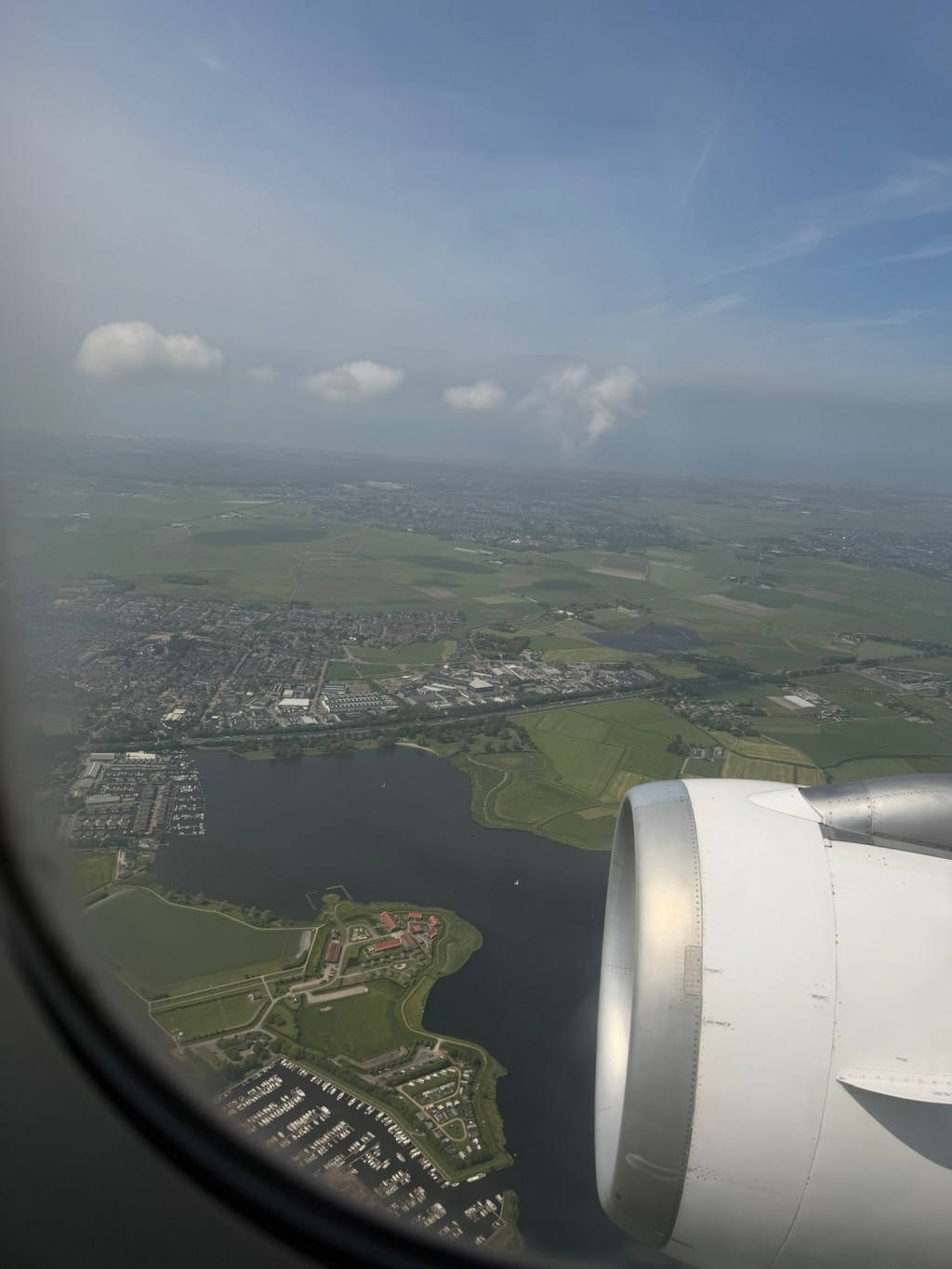
My first view of Amsterdam in May earlier this year came from the air. As the plane descended, the waterways appeared before the city did: rivers, canals and geometric lines of water threading through the landscape. From above, the relationship looked almost elegant. On the ground, I learned it is also complicated, engineered and very much alive.
I spent the visit walking along canals, crossing bridges and trying not to wander into a bicycle lane with the misplaced confidence of an American pedestrian. In Amsterdam, bicycles are not a charming side feature. They are part of the city’s operating system—connected to public transit, streets, neighborhoods and daily life.
The water is part of that system, too. It holds history, commerce, beauty and risk. Amsterdam is preparing for heavier rain, drought, heat and rising seas, and its climate work increasingly recognizes that adaptation is not only an engineering problem. It is also about public health, inequality, governance and who benefits from investment.
That is the environmental justice question I kept carrying: who is safest when a city adapts, who has access to clean and shaded public space, whose neighborhood receives protection first, and who gets to move through the city affordably?
Amsterdam is not a perfect model to copy and paste somewhere else. Cities are not PowerPoint templates. But it showed me how water, transportation, public space and climate resilience can be considered together—and how everyday infrastructure quietly communicates what and whom a city values.
Flying in, I noticed the water. Walking and researching afterward, I began to notice the choices around it.
#Amsterdam #EnvironmentalJustice #ClimateAdaptation #Water #Cycling #SustainableCities #PublicSpace #PlaceBasedLearning




Leave a Reply